Exotic Hardwood Decking: IPE, Cumaru, Merbau, Padouk, Bamboo and Other Wood Species - Which One to Choose?
-
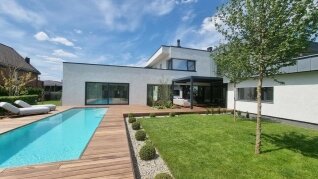
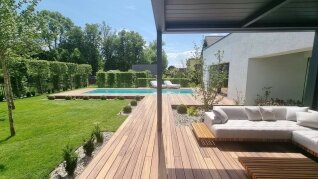
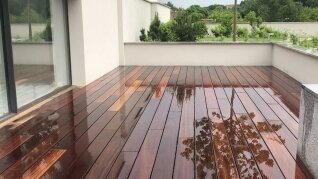
A terrace has long been more than just a place for seasonal relaxation. Increasingly, it is becoming a natural extension of the home – a space for morning coffee, family dinners, gatherings with friends or peaceful moments of relaxation. That is why, when planning a terrace, it is important to consider how it will look ten or more years from now.
Why Choose Exotic Hardwood for Decking?
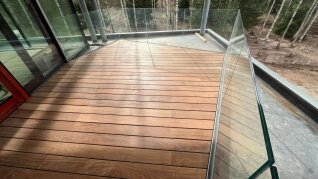
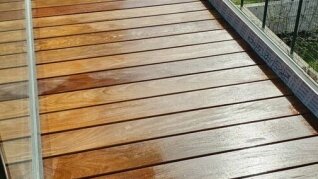
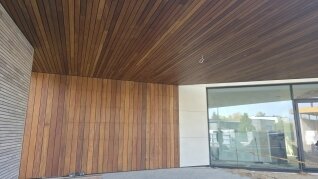
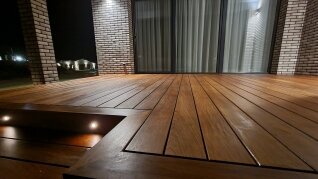
Exotic hardwood decking boards are valued for their properties that allow terraces to remain reliable, stable and exceptionally attractive for many years. Hardwoods have a naturally dense and strong structure, making them highly resistant to environmental conditions and intensive use.
The main advantages of exotic hardwood include:
- High density and strength;
- Natural resistance to moisture and decay;
- Stability under varying weather conditions;
- Long service life;
- Exceptional beauty of natural wood.Thanks to these properties, exotic hardwood is used for both private terraces and public spaces, including hotels, restaurants, waterfront promenades, marinas and other high-traffic areas.
Which Wood Species Is Best Suited to Your Terrace?
Although all exotic hardwood species are known for their durability and resistance to environmental conditions, each has its own distinctive characteristics. Wood should therefore be selected according to the specific requirements of each project, considering expected loads, architectural context, desired aesthetics and maintenance expectations.
IPE – Maximum Durability
IPE is considered one of the hardest and most durable decking wood species in the world. Its exceptionally high density makes it resistant to moisture, decay, insects and intensive mechanical wear.
This wood is often chosen for public spaces, restaurant terraces, marinas and projects where reliable long-term performance is the main priority.
Cumaru – A Balance Between Aesthetics and Value
Cumaru is one of the most popular exotic hardwood species in Europe. It is valued for its excellent balance of price and durability, stability and warm golden-brown tones.
It is a popular choice for private residential terraces where long-lasting performance, natural beauty and a sensible investment are equally important.
Merbau – A Time-Tested Classic
Merbau wood is valued for its stability, resistance to environmental conditions and rich reddish-brown colour. It is suitable for both residential and commercial projects seeking a classic aesthetic.
Sucupira – For Distinctive Design
Sucupira stands out for its darker colour and pronounced wood grain. It is particularly suitable for projects where the terrace becomes an important element of architectural expression and is intended to create a sophisticated, distinctive impression.
Padouk – Naturally Distinctive Colour
Padouk wood is easily recognised by its rich reddish-orange colour. Over time, this hardwood naturally turns grey, developing an elegant silver tone.
Araracanga – For Those Seeking Individuality
Araracanga is a rarer exotic hardwood species characterised by decorative grain patterns and a variety of natural colours. It is most often selected for projects where the individual character of the wood is particularly important.
Bamboo – A Modern Alternative
Compressed bamboo is not an exotic hardwood, but it is increasingly being chosen as a modern alternative. Using patented CeramiX® technology, bamboo fibres are crystallised, impregnated and compressed into an exceptionally stable and strong bamboo product.
Bamboo is suitable for contemporary projects where modern aesthetics, sustainability considerations and a uniform surface appearance are important.
The Best Proof of Quality Is Time
When it comes to decking boards, marketing promises may sound convincing. However, the true quality of a material is best demonstrated over time. With more than two decades of experience in projects of various scales, WOODLINE has seen its oldest exotic hardwood terraces reach 12–15 years of service. These projects demonstrate how properly selected wood withstands the test of time and how long-lasting performance results from the right material choices and professional solutions.
Durability Depends on More Than Just Wood
A common misconception is that purchasing the highest-quality decking boards alone guarantees a successful result. In practice, this is not the case. Even the finest wood will not deliver its full potential if installed on an unsuitable substructure, without adequate ventilation or with inappropriate fastening systems. Professional terrace design therefore begins not only with choosing the decking boards but also with planning the entire structural system.
This is precisely why more and more customers are looking not simply for a material supplier, but for a partner who can help them make the right decisions for their specific project.
Concealed Fastening with the B-Fix® System
One professional solution that helps maintain a clean decking surface while ensuring proper board fastening is the B-Fix® concealed fastening system. Stainless steel fasteners are inserted into grooves along the sides of the boards, leaving no visible screw heads on the decking surface.
The B-Fix® system's spring effect allows the wood to move naturally in response to changes in humidity and temperature, while individual boards can be removed locally when necessary. This system can reduce installation time by up to 40%.
Exotic Hardwood Is Chosen Where Compromise Is Not an Option
Exotic hardwood is often selected for projects where decking must meet significantly higher requirements than those typically found in private residential terraces.
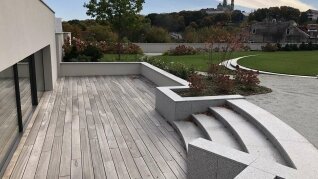
Hotels, business centres, waterfront promenades and public spaces are exposed daily to heavy foot traffic, constant weather conditions and substantial operational loads. In such projects, aesthetics alone are not enough – solutions must remain reliable for many years while requiring as little maintenance as possible.This is why exotic hardwood is chosen for many such projects.
Examples of projects supplied by WOODLINE include:
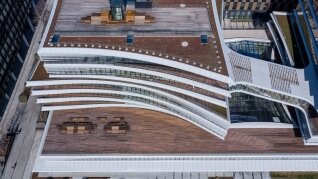
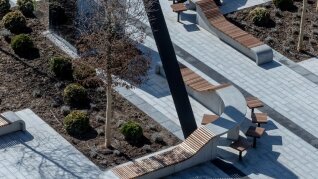
- Memelio Miestas, Klaipėda – IPE wood, selected for its resistance to intensive use and coastal climate conditions.
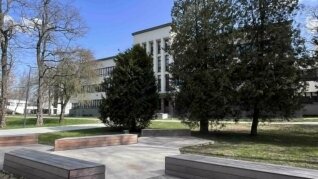
- KTU Faculty of Chemical Technology, Kaunas – IPE, one of the most durable decking wood species in the world.
- Courtyard by Marriott, Vilnius – Sucupira, combining distinctive aesthetics with excellent performance characteristics.
- Danė River Embankment, Klaipėda – Azobe, an exceptionally dense and strong wood used in demanding operating conditions.
- Business Stadium Central, Vilnius – Sucupira wood, selected according to the project's architectural design and expected loads.What unites these projects is the approach to wood selection. In each case, consideration was given not only to the architectural vision but also to how the material would perform over time, the loads it would be exposed to and the maintenance it would require. Decisions were made by evaluating the full context of each project.
The Most Common Mistakes When Choosing Decking Boards
- Making a decision based solely on price. A lower initial investment does not always mean lower costs in the long term.
- Failing to consider operating conditions. Coastal locations, poolside terraces, south-facing areas and completely exposed spaces subject wood to more demanding environmental conditions.
- Choosing wood based only on colour. Wood colour changes naturally over time, so evaluating its technical properties is essential.
- Cutting costs on the substructure. Even the highest-quality decking boards cannot deliver their full performance if the structure is poorly designed or installed. A durable terrace depends on the entire system – from the foundation and fastening solutions to the selected wood.
- Not consulting specialists. Wood selection depends on numerous factors, from the project's location and architecture to usage intensity and maintenance expectations. Professional advice therefore helps avoid decisions that may lead to disappointment later.An Individual Solution for Every Project
“Our goal is not simply to sell decking boards. First, we aim to understand what result the customer expects in ten or twenty years. Only then do we recommend the most suitable wood and solution. This approach allows us to create terraces and small-scale architectural structures that retain both their functionality and aesthetic value over time,” says Juozas Ėmužis, Head of the Projects Department at WOODLINE.
According to him, consultation at the beginning of a project makes it possible to select a solution that best meets the specific requirements and ensures long-term performance.
What Criteria Should Be Considered Before Choosing Decking Boards?
Although aesthetics remain important, specialists recommend evaluating the technical properties of the material as well.
Before making a decision, it is worth answering several questions:
- Will the terrace be fully exposed to rain and sunlight?
- Will it be installed on the coast, beside a swimming pool or near a body of water?
- How intensively will it be used?
- Is the longest possible service life the main priority?
- Is regular oiling planned, or is a natural weathered appearance preferred?
- Which visual result best complements the architecture of the building?The answers to these questions help determine the most suitable wood for each specific project.
How to Preserve the Beauty of a Hardwood Terrace
An exotic hardwood terrace does not require complicated maintenance, but regular preventive care helps preserve its attractive appearance for longer.
Specialists recommend:
- Regularly removing accumulated dirt;
- Preventing moisture and leaves from accumulating between the boards;
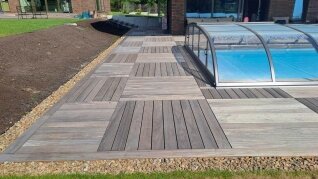
- Periodically applying an oil suitable for the specific wood species if the original colour is to be maintained.It is important to know that untreated exotic hardwood naturally develops a silvery-grey colour. This is a natural process that does not affect its strength or durability.
Article link: https://www.15min.lt/verslas/naujiena/bns-spaudos-centras/egzotinio-kietmedzio-terasines-lentos-ipe-cumaru-merbau-padouk-bambukas-ir-kita-mediena-ka-rinktis-536038